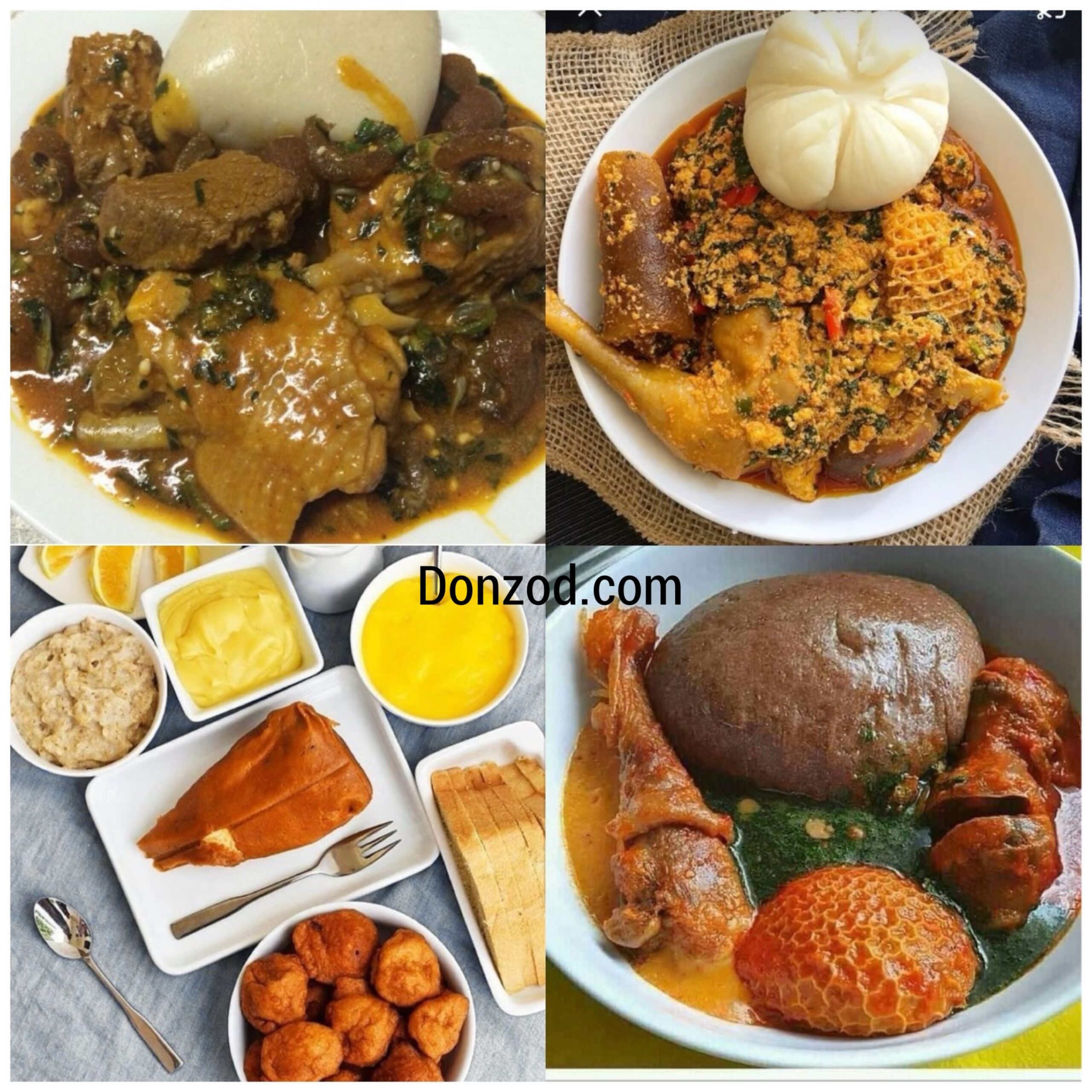
Nigerian traditional foods are a testament to the country’s rich cultural heritage, offering a wide variety of delicious and nutrient-packed dishes that nourish the body and promote good health.
Nigeria is truly blessed with culinary diversity that reflects its vibrant ethnic traditions.
Nigeria is a blessed country with so many different kind of foods that are not only delicious but also very rich in nutrients that keeps the body strong and healthy.
From the North to the South, every region creates traditional dishes with natural ingredients packed with vitamins, proteins, minerals, and many other nutrients the body needs.
Many people today are abandoning this local foods for foreign ones like burgers and pizza, not knowing that this local dishes have more nutritional value and helps in preventing different types of sickness.
When we talk about Nigerian traditional foods, we are talking about meals like pounded yam with egusi soup, amala with ewedu and gbegiri, tuwo shinkafa with miyan kuka, fufu with ogbono soup, rice and stew, moi moi, okpa, abacha, and so many others.
These foods are not just ordinary, when prepared the right way, they become balanced diets on their own.
List of Nigerian Traditional foods
1. Pounded Yam and Egusi Soup
Pounded yam is one of the most popular traditional food in Nigeria, especially among the Yoruba people. You make it by boiling yam and pounding it until it becomes smooth and stretchy.
Yam is a root crop that is rich in carbohydrates, which gives the body energy to work. It also contain fiber which helps digestion and prevent constipation. Some yams also have vitamin C and potassium that helps in blood pressure regulation.
On the other hand, people make Egusi soup from melon seeds, which provide a good source of protein and healthy fats. Egusi also contains magnesium, iron and zinc which are important minerals for the body.
When you cook egusi with vegetables like spinach or bitter leaf, and add fish or meat, you get a very rich and balanced meal that can keep you full for long hours.
Many nutritionists have even said that egusi soup is better than many foreign soups because it has natural oil and not processed ones.
2. Amala, Ewedu, and Gbegiri
Amala is another traditional food that has many health benefits. It is made from yam flour or sometimes plantain flour or cassava flour.
Amala is rich in carbohydrates, but it also provides fiber and vitamins, especially when cooks prepare it with unripe plantain flour. It gives the body energy and digests easily.
People make Ewedu soup from jute leaves, which contain high amounts of vitamins A, C, and E.
These vitamins help in improving eyesight, boosting the immune system and keeping the skin fresh and healthy.
Cooks make Gbegiri from beans, and it is full of protein that helps build body tissues and muscles.
When you eat amala with ewedu and gbegiri, you are eating a combination of nutrients that can compete with any modern dish in the world.
3. Tuwo Shinkafa and miyan kuka
In the northern part of Nigeria, tuwo shinkafa and miyan kuka are very common foods. Tuwo shinkafa is made from soft rice that is mashed together. It is light and easy to digest, and it gives the body energy because of its carbohydrate content.
Miyan kuka is made from powdered baobab leaves. These leaves are very rich in iron and calcium, which helps in building strong bones and also in blood formation.
Miyan kuka also has antioxidants that protect the body from diseases. When cooked with meat or fish, it becomes a complete meal that can keep someone strong and active for the whole day.
Many people in the north believe that eating miyan kuka regularly helps them to stay healthy even during the hot weather.
4. Fufu and Ogbono Soup
Fufu is made from fermented cassava. Some people also make it from cocoyam or plantain. Fufu is a source of carbohydrate, which gives energy to the body. Because fermentation enriches it, the food contains beneficial bacteria that aid digestion
Ogbono soup which is also called draw soup, is made from wild mango seeds. These seeds have high oil content that is healthy for the heart.
Ogbono also have omega 3 fatty acids which helps in brain function and reduces inflammation in the body.
When you cook ogbono soup with vegetables, fish or meat, it becomes a powerful meal that gives both energy and protection against sickness.
5. Moi Moi and Akara
Beans is one of the most nutritious food in Nigeria, and two of the most popular ways to eat it are moi moi and akara.
Moi moi is made from blended beans, pepper, onions, and oil, then steamed. It is rich in protein, iron and folate.
Protein helps to repair tissues while iron helps in blood production. Folate is very important for pregnant women because it helps the baby’s brain to develop properly.
Akara is a fried bean cake made from blended beans and pepper. Even though cooks fry it, it still packs plenty of protein and fiber.
Eating akara with pap or bread is a common Nigerian breakfast that gives strength and keeps one full till afternoon.
6. Okpa
The Enugu people, especially in eastern Nigeria, enjoy Okpa as a special delicacy
It is made from Bambara nut flour. Okpa is very high in protein, and it also contain magnesium and potassium. People believe it promotes muscle growth and keeps the heart healthy.
Cooks usually steam Okpa, which makes it very healthy because it requires little oil.
7. Abacha (African Salad)
Abacha, also known as African salad, is a traditional meal that delights with both taste and health benefits. Cooks prepare it from dried shredded cassava, then mix it with palm oil, garden egg, fish, and sometimes ugba (oil bean).
Abacha has a lot of fiber that aids digestion and prevent constipation. It also has vitamins and minerals depending on what ingredients you add.
The palm oil used in abacha is rich in vitamin A and E which helps in improving eyesight and keeping the skin glowing.
8. Rice and Stew
Even though rice is not native to Nigeria, it has become part of our tradition. Rice is a carbohydrate rich food that gives energy.
The stew cooked with tomatoes, pepper, and onions is full of vitamin C and antioxidants that helps fight diseases. When cooks prepare stew with fish or meat, it provides the body with protein and iron.
The Benefits Of Nigerian Traditional Foods.
The main benefits of Nigerian traditional foods are:
They use natural, fresh ingredients. Most of the time, farmers supply the vegetables from local farms, and cooks choose oil that is less processed than foreign ones. This makes the food safer and healthier.
Traditional foods help in maintaining cultural identity. When we eat these foods, we are not just feeding our stomach but also preserving our heritage. People have eaten many of these foods for generations.
Local foods cost less than foreign ones. Shoppers find most of the ingredients in local markets, and vendors supply oils that are less processed. That means even people who do not have much money can still eat healthy.
Conclusion
In conclusion, Nigerian traditional foods are not just tasty but also full of nutritional benefits that helps the body in many ways.
They are rich in protein, vitamins, minerals, fiber, and good fats that keeps the body strong and healthy. From pounded yam and egusi to okpa and abacha, each dish has something special to offer.
Instead of abandoning them for foreign foods that may not be as nutritious, we should learn to appreciate and eat more of our local dishes. By doing this, we will not only stay healthy but also continue to keep our culture alive.
Leave a Reply